Putting monitoring and decision-making in community hands, not outsiders'.
core education programmes
0
university partner (Antwerp)
0
seascapes reached
0
Far more attention has gone to protecting Tanzania’s forests and savannas than its aquatic ecosystems, even though rivers, wetlands, and the coast support the same communities. AFO built its aquatic and marine education work to close that gap directly, training young people and coastal residents to understand and monitor the resources they depend on, rather than leaving that knowledge to outsiders.
Women Water Watch
Women Water Watch, an EU-funded citizen science initiative in Bagamoyo run with the University of Antwerp, trains community members to test and monitor water quality themselves, putting scientific tools directly in local hands.
Aquatic Resources Education Program (AREP)
The Aquatic Resources Education Program (AREP) raises awareness among young people about the value of aquatic resources, water systems, and the plants and animals that depend on them, alongside the practical skills to act on that knowledge.
Community and BMU Training
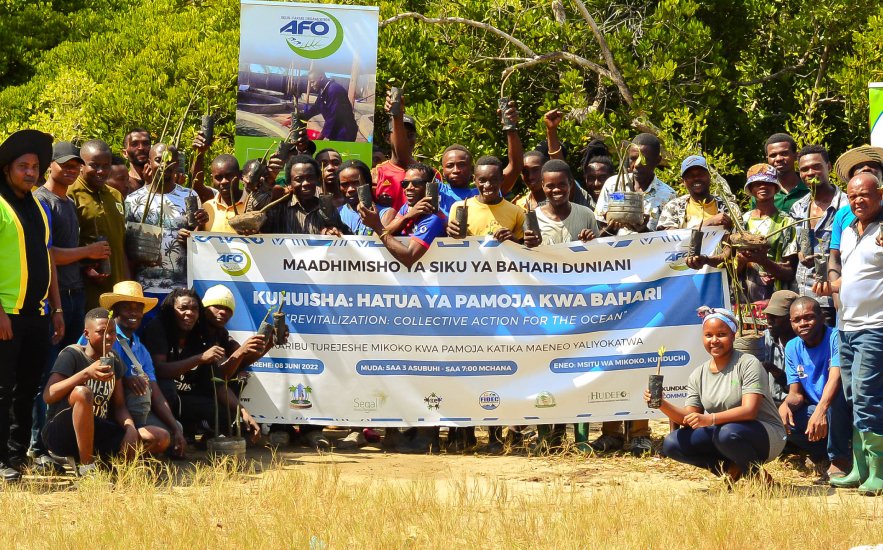
Across all four seascapes, this same approach carries into governance: Beach Management Unit training, sustainable fishing practice, and leadership training aimed at women and other groups usually left out of coastal decision making. That training feeds directly into the community structures behind AFO’s fisheries governance and ecosystem restoration work.