
Nearly 50% of Tanzania’s coral reefs and mangroves have been degraded or lost, threatening food security, coastal protection, and biodiversity.
The ocean can recover, but only if we help it breathe again. AFO leads large-scale marine restoration that blends science with community power, bringing corals, mangroves, and seagrass meadows back to life along the coast of Tanzania. Every reef restored becomes a classroom for resilience, every mangrove planted a carbon bank for the planet and a source of community income. Our restoration work does not stop at ecology, it rebuilds dignity and identity, because when people are part of the solution, restoration becomes regeneration.
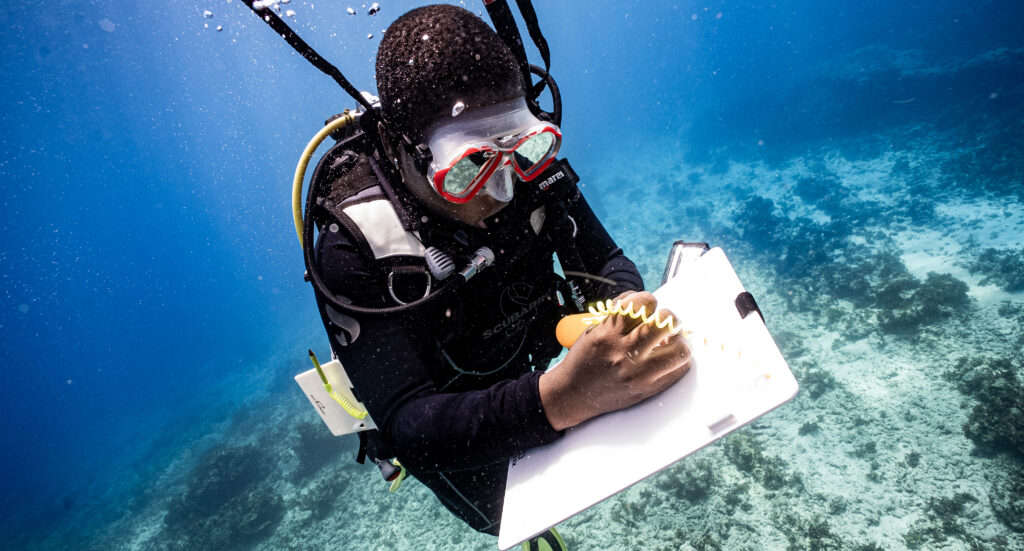
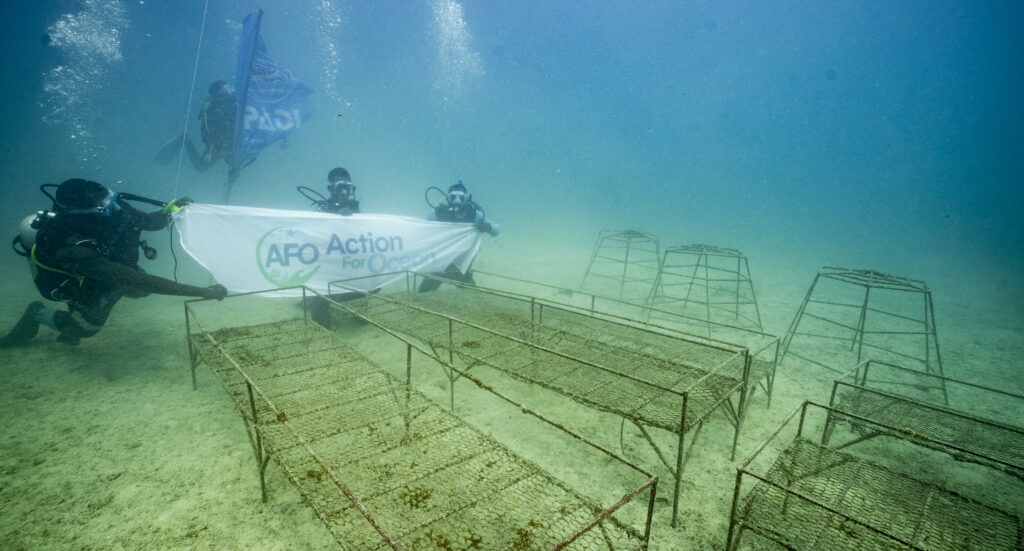
We train and certify local divers to rebuild degraded reefs, building coral frames and monitoring recovery across Tanzania’s four seascapes. Restoration here doubles as a skills pipeline, most reef restoration divers go on into AFO’s wider Ocean Access programme.
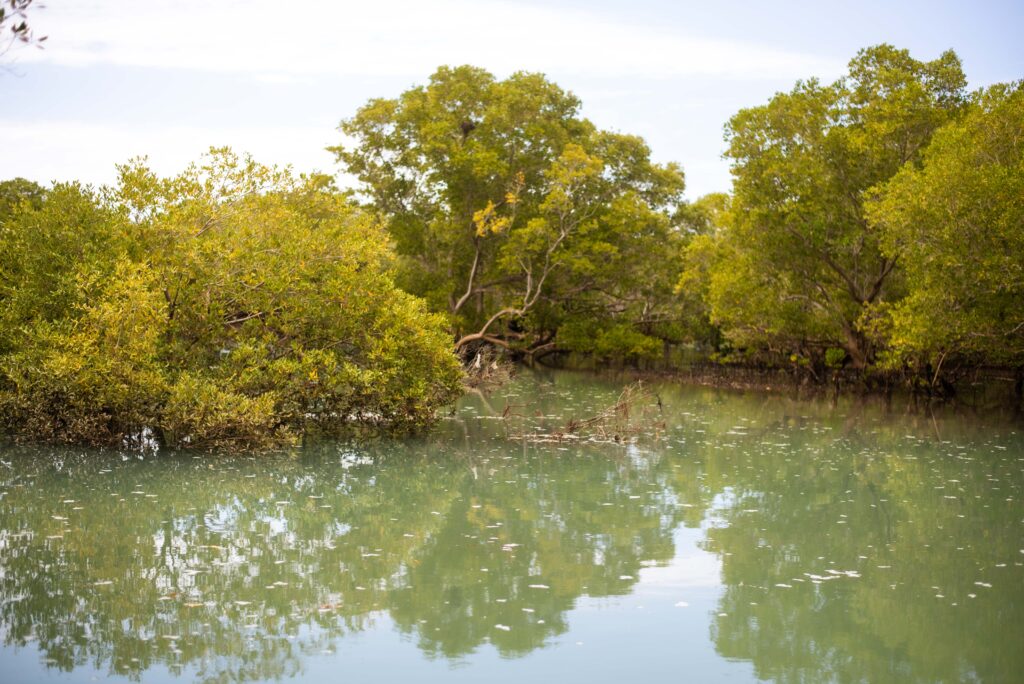
Community-led, largely women-led, mangrove nurseries operate across four seascapes, planting and monitoring seedlings that protect the coastline and lock away carbon for decades.
Our dedicated seagrass conservation work is currently in development, extending the same restoration and monitoring model that has already proven itself in coral and mangrove habitats.
“The ocean can’t wait, and neither can we.”
287,240 mangroves restored. 69 communities in co-management across Tanzania’s coast. None of it happens without people like you.