More than 70% of Tanzania’s coastal households live below the poverty line even as their daily survival depends on the ocean’s declining resources.
Along Tanzania’s coastline from Mtwara to Tanga, families rise and rest with the tides. The ocean feeds them, yet for many it no longer pays. Action For Ocean is working to change that by building sustainable blue economy livelihoods that make conservation profitable, dignified, and lasting, through our Coastal Livelihood for Entrepreneurship and Resilience (CLEAR) Model.

The CLEAR Model follows five phases, Engage, Build, Finance, Link, Sustain, guiding coastal people to build businesses that protect the ocean instead of depleting it. It is incentivised conservation: stewardship that pays.
We work with private-sector and government partners to unlock new value chains for seaweed, coral restoration work, eco-tourism, and blue carbon credits, so every livelihood contributes to both income and impact.
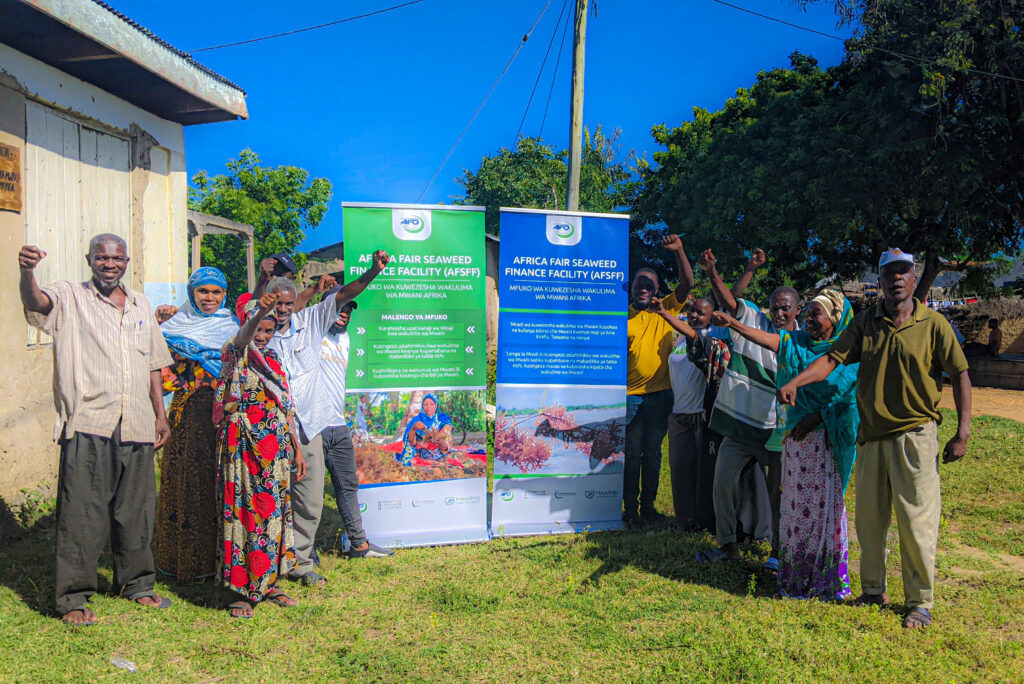

Village Savings and Loan Associations (VSLAs) link household savings directly to ocean enterprises and blended finance, so seaweed farmers become exporters, divers become restoration experts, and youth turn innovation into livelihoods.
“When livelihoods thrive, conservation becomes unstoppable.”
287,240 mangroves restored. 69 communities in co-management across Tanzania’s coast. None of it happens without people like you.