AFO Engagement Reflection · Our Ocean Conference 2026 · Mombasa, Kenya
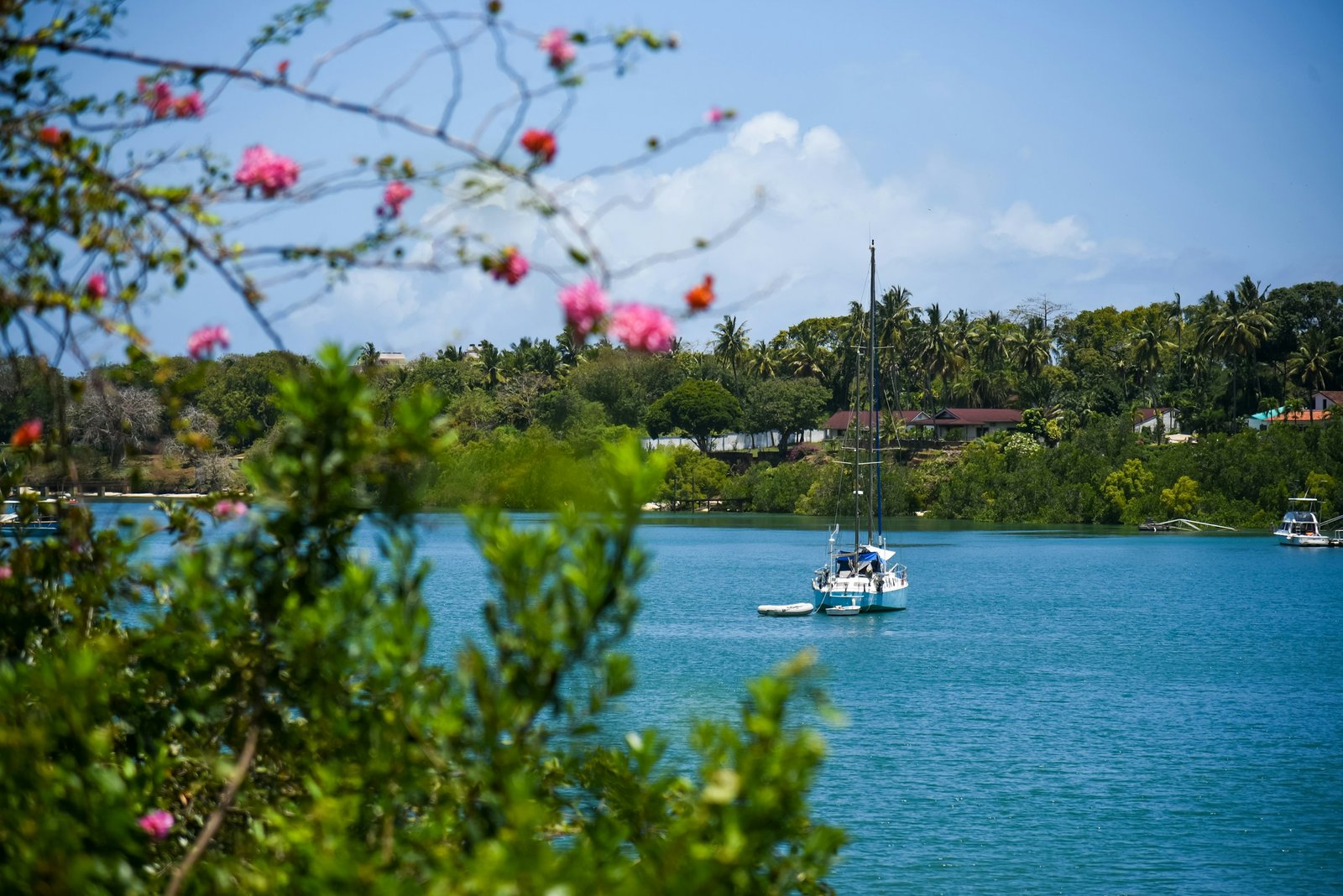
Mombasa, Kenya. Fifteen and sixteen June. For the first time in the eleven year history of the Our Ocean Conference, the room was on African soil.
That mattered more than it might sound. Since 2014, this conference has mobilized thousands of pledges worth more than one hundred billion dollars, uniting governments, industry, science, and civil society around measurable ocean commitments. For a decade, that dialogue happened elsewhere. In Mombasa, under the theme “Our Ocean, Our Heritage, Our Future,” African led priorities finally sat at the center of it rather than at the edge.
Action For Ocean showed up across the full arc of the conference. Co founder and Executive Director Jerry Geofrey Mang’ena, technical lead Arnold Shoko, and Brand Impact Communications and Knowledge Management Lead Javis Bashabula spoke across eight sessions and panels, from the pre conference Executive Business and Investment Forum through to a major funding announcement naming AFO’s Tanzania blue carbon initiative among six projects backed by a fresh 2.2 million pound commitment from the Ocean Risk and Resilience Action Alliance (ORRAA).
What follows is not a highlights reel. It is the argument AFO’s team made, session by session, for why coastal communities are not conservation’s last mile. They are its first.
Conservation is not charity work
The line that traveled furthest belonged to Arnold Shoko, delivered during the session on Empowering Local Community Leadership:
“We are firm believers that conservation is not charity work. It cannot work if people do not get tangible benefits.”
It is a correction aimed at the whole sector, AFO included. For years, the pitch to communities asking them to reduce fishing effort or close a reef has leaned on appeals to conscience. Shoko’s point, made through the specific example of an octopus closure, is that appeals to conscience do not survive a bad season.
“Telling them you need to close is a good thing, but telling them that if you do this thing properly, maybe in the next two, three years you generate more than one hundred thousand US dollars in revenue, that would really be different. They would not be doing it for the sake of making you happy, but because there are tangible results.”
That is not a softer version of the same message. It is a different contract. One asks for compliance. The other asks for investment, from people who now have a stake in protecting what they closed long after the NGO vehicle has left.
Shoko framed AFO’s answer as the 3C Model: Custodianship, where communities build the governance, rights, and stewardship capacity to manage their own resources. Capital, which connects that governance to real livelihoods, markets, and financing. And Compact, the formal and informal agreements between communities, government, private sector, and conservation partners that hold everyone accountable once the benefits start flowing.
He was honest, too, about what the model is up against.
“You get called by the communities you work with, but you cannot go back to them because you don’t have money. You definitely cannot tell them that. But you wish to go, but you cannot even pay for fuel.”
It is a small detail. It is also the truest measure of what a funding cliff actually costs: not a program, but a relationship, and the trust that took years to build.
“We are treating coastal communities as partners and not just mere beneficiaries.”
At the close of that same session, Jerry Mang’ena added a fifth word to a framework Kristian Teleki had offered: People, Protection, Production, Prosperity, and Partnerships. Jerry’s addition was Permanence, because the real test of community led conservation is not what happens during a project. It is what continues long after the project ends.
Communities are not the risk. They are the solution
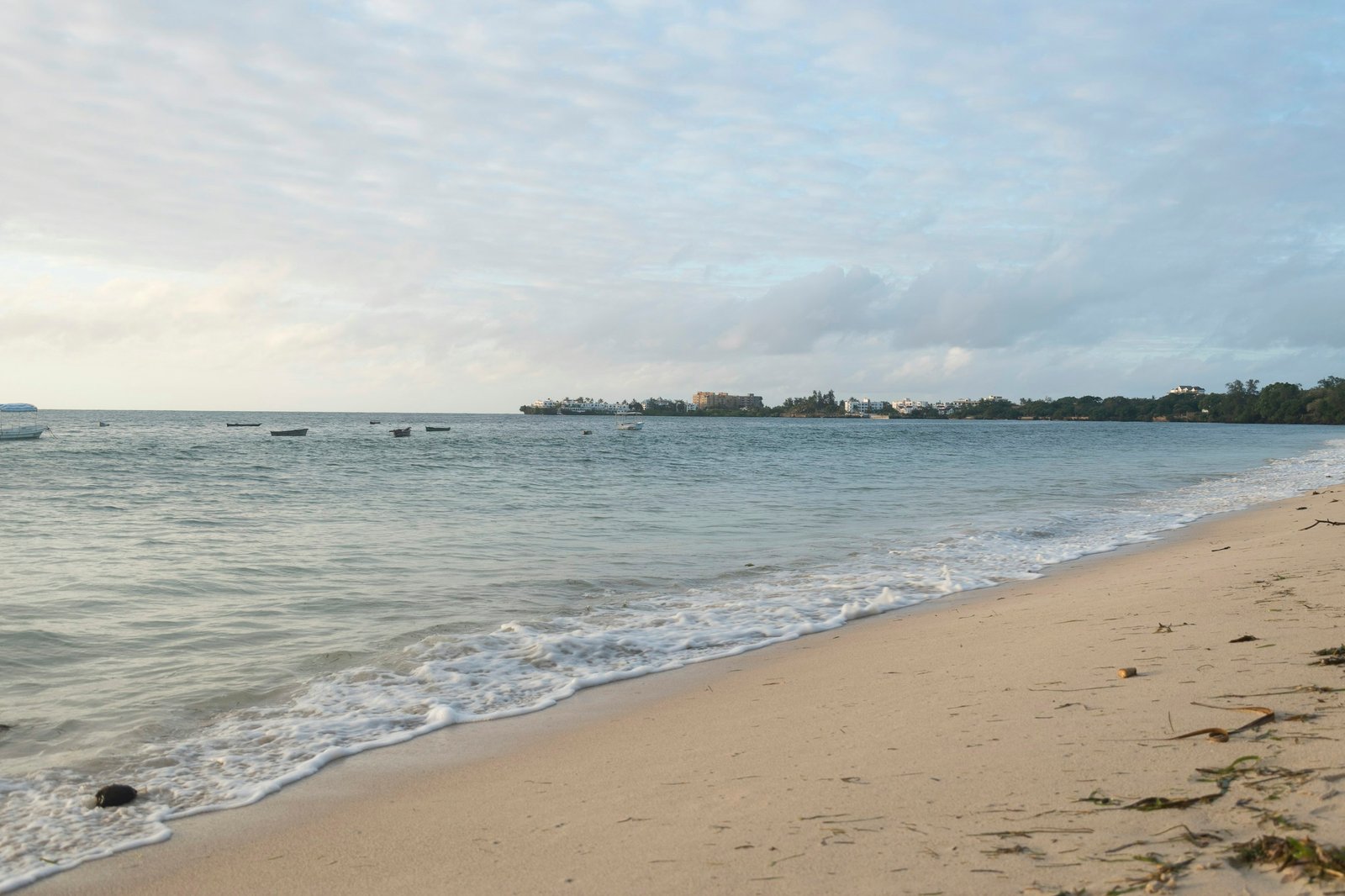
That argument found its sharpest form two sessions later, when Jerry sat on a panel convened by the Sustainable Finance Coalition alongside Sanlam Investments, Blue Ventures, and the Coalition’s own leadership, unpacking what they call Connected Finance.
“The problem is not that coastal communities are uninvestable. The problem is that most financial products were never designed for them.”
For decades, fishers, seaweed farmers, and coastal entrepreneurs have been asked to fit financial systems built for steady, predictable income. Theirs is neither. It moves with the weather, the tide, and the season. When a product built for someone else’s risk profile fails on contact with that reality, the community gets labeled high risk rather than the product being labeled poorly designed.
Jerry’s answer was to define community led conservation itself as something more precise than the phrase usually implies:
“Community led conservation, if we simplify it to the best, is a governance model that provides opportunities for the communities to apply their right holders’ right of the asset that they have, become decision makers of the key issues that are happening with their asset, but also become custodians of that change.”
He grounded that definition in a practical claim about who actually understands the resource:
“They are the ones who can really tell us what is actually changing. If we are sitting in major cities and not communicating with people who see the actual changes day to day, then it’s a complete disconnect.”
And on what it would actually take to close what he called the trust gap between capital and communities:
“Any type of capital follows trust. If you say we want to fund trust, how does that look in a practical way? It means spending time and being together, having opportunities to co design matters important to the people on ground but also important to the ones providing capital.”
Less than one percent of climate and biodiversity finance reaches Indigenous Peoples and Local Communities directly. Jerry’s closing line to that room was less a complaint than an instruction:
“We often say communities are risky, not investable, and try to make communities fit for finance. But what we are seeing working is when we design finance to fit the communities. Community led conservation is not a project model. It is a governance model.”
Who gets to be a co author
Not every reflection AFO carried out of Mombasa came from a stage. Some came from a room that could not agree with itself.
At an Ocean Innovation Africa dialogue on marine carbon dioxide removal, Communications and Knowledge Management Lead Javis Bashabula watched some of the sharpest people in ocean conservation split cleanly down the middle. One side argued the ocean cannot wait for slow science. The other argued that handing a community a solution and quietly revising it later spends a kind of trust that does not come back.
“mCDR. An acronym that means absolutely nothing to anyone who actually lives off the sea.”
The room kept circling back to a question it could not answer cleanly: where are the communities in all of this?
“On paper, our carbon models look beautiful. Then we took them to the field and the communities politely showed us where they fell apart. They already knew the mangroves. They already held the baseline we were trying to model from a desk in town. So we stopped doing science to people and started doing it with them. We stopped saying host communities and started saying co investors, people who own a piece of the work, carry some of the risk, and are still in the room when the science inevitably gets corrected.”
The question that followed him out of that room was not really about carbon science at all. It was about standing. Do African organizations show up to these conversations as receivers of someone else’s technology, or as co authors of the science, the evidence, and the rules that will govern their own coastline.
What that standing bought
Four days into the conference, that question had an answer with a number attached to it.
The UK’s Department for Environment, Food and Rural Affairs committed a fresh 2.2 million pounds through its Blue Planet Fund to ORRAA, supporting the Alliance’s Secretariat and six innovative finance and insurance projects that have already proven their pilots. Among them: a scalable blue carbon credit initiative in Tanzania, led by Action For Ocean, the only Tanzanian project on a list that also included Indonesia, Kenya, Colombia, and the Dominican Republic.
UK Marine Minister Emma Hardy, announcing the funding, put it plainly: “Behind every statistic is a fishing community better protected from storms, a mangrove forest pulling carbon from the atmosphere, a family no longer at risk of losing their home to rising seas.”
What the marine sector still owes the land
Not every lesson AFO brought home from Mombasa was about finance. Some were about humility.
In a conversation between Sam Shaba and Adam Miller, convened by Maliasili, the Paul M. Angell Family Foundation, and Blue Ventures, Jerry sat with a comparison that terrestrial conservation has a decade’s head start on marine conservation in learning.
“The challenge is not whether communities are part of the solution. The challenge is whether we trust them enough to lead.”
Adam’s reflection, as Jerry carried it forward, was that terrestrial conservation has spent the last ten years shifting funding and decision making toward local organizations and community institutions, driven by growing recognition that outcomes depend on local leadership, not local labor. The marine sector has adopted the language of community led conservation. It has not yet finished the harder work of translating that language into power.
The distinction that stayed with Jerry longest was between participation and ownership.
Communities can participate in a project without owning it. They can implement its activities without shaping its priorities. They can be consulted without holding any real power over the outcome. AFO’s own experience across four seascapes has shown the opposite pattern: conservation becomes more resilient exactly when communities are trusted to lead it, and when local institutions are strong enough that the work survives donor cycles and funding disruptions rather than depending on them.
Building intelligence that starts on the water, not in the lab
At the pre conference Executive Business and Investment Forum, Jerry joined a panel on blue technology and artificial intelligence with David Ogiga, Herland Cerveaux, and Dr Eric Lewa Katana. His argument was that the sector has the order of operations backward.
“Community intelligence must be the foundation of ocean intelligence.”
Fishers and coastal communities interact with the ocean every day. Their knowledge has to shape the data systems built to understand it, not the other way around. Jerry made a case, too, for reframing what traceability is actually for.
“Traceability should not only be a compliance tool. It can become a market tool that brings more value, trust, transparency, and finance back to farmers and fishers.”
Technology, in his framing, will only work at scale if it is grounded in real local challenges and built alongside the people who will use it, not designed around them and shipped in afterward.
The blue economy is not a sector
The morning plenary of the Executive Business and Investment Forum gave Jerry the line that, in some ways, sums up everything the week argued for.
“The blue economy is not a sector. It is an ecosystem.”
The future of Africa’s blue economy, he told the room, will not be built by one sector working alone. It will be built where ports meet communities, where subsea cables meet innovation, where finance meets entrepreneurship, and where healthy oceans create healthy economies. One message stood out to him above the rest: the sector spends too much time chasing trophy projects and not enough time removing the friction that keeps existing opportunities from growing. Every improved trade corridor, every digital connection, every cold chain investment, every community enterprise, and every financing mechanism creates a multiplier effect the sector consistently underrates.
That is the case Action For Ocean carried across eight sessions in Mombasa, in a dozen different rooms, to a dozen different audiences. Communities are not the last mile of conservation finance, waiting at the end of the chain for whatever reaches them. They are the first mile, the ones who hold the baseline, carry the risk, and outlast every project cycle that claims to serve them.
The oceans will not be protected from a boardroom in a capital city. They will be protected by the people who already wake up beside them.
Action For Ocean works across four coastal seascapes in Tanzania, Tanga, Kilwa, Mtwara, and Dar es Salaam, building conservation models designed to put communities at the center of the blue economy they already sustain.